I'm featured in an illustration directory by Maker Mentors! Included are 50 illustrators from around the world, in various illustration fields. The list of illustrators is on their blog:
http://makermentors.org/illustration/50-freelance-illustrators-know-follow-hire/

Tuesday, November 21, 2017

Friday, March 17, 2017
Marcos Chin

Marcos Chin is an award-winning illustrator based in New York. He has worked on a variety of projects including wall designs, books, CD covers, advertisements, fashion, and magazines. He also has his own T-shirt label called Yee Yee. Marcos also teaches at the School of Visual Arts.
Marcos' illustrations are beautifully detailed with his elegant lifework. He creates dream-like worlds with bright colours. Many of his illustrations include flowers and plants. Marcos also uses a lot of pattern in his work.
http://www.marcoschin.com/
Friday, March 03, 2017
Little spot

This is the original print.

Friday, February 24, 2017
Capability Club logo

Friday, February 17, 2017
Broken Pencil illustrations
In December I worked on two illustrations for Broken Pencil magazine, a zine and independant arts magazine. They were for two short stories, one titled "Girl" and the other "Dissections".
 This one is for "Girl", a short story about a girl getting lost in the forest, and starts to hallucinate.
 This one is for "Dissections", about a high school biology class, and a mishap that happens.


These are the roughs for the two illustrations.


These are the roughs for the two illustrations.


Friday, February 10, 2017
Poppy

This is my submission to the first issue of Future Fossil Flora, a UK-based magazine. Each issue they feature a different flower. The first issue is the poppy. I illustrated a prickly poppy. They want the images to be a modern interpretation of botanical illustrations, so I kept it simple with a cream background.
Friday, February 03, 2017
Stegosaurus

This print is available on t-shirts from Threadless!
Here are some process pics.


Friday, January 27, 2017
Should you work for free?
Working for free is something that comes up often when you are beginning your career. There are mixed answers to this question on the internet. My answer is: "it depends". It depends who is offering the job, and what they will be doing with the artwork. If the person offering the job is someone anonymous on Craigslist and is offering you exposure as "payment", I would say no to these jobs. They don't really care about you or your artwork and are just looking for free work. If the person offering the job is an art director at an already established magazine, for example, Discorder, this is a little more credible and you can accept these jobs if you are looking for experience working with an art director. These kind of jobs will also result in portfolio pieces for you. If a friend wants you to do free work, I think this is a personal decision you have to make. Basically I think you need to ask yourself some questions:
Is the project interesting?
Will you get a portfolio piece out of it?
What kind of exposure do you get?
Will it be good experience (i.e.: working with an art director)?
My first magazine illustration gig was with Discorder, a local Vancouver magazine. It didn't pay, but I got some portfolio pieces out of it. I also learned how to work with an art director, and how to work within certain restrictions (i.e.: black and white, spot illustrations). I also learned how to work under a deadline. Working on a real life deadline is different than working under soft deadlines in school. There were no real consequences if you didn't get the work done on time. For me, those first non-paying jobs were worth it. Paying work followed, and I had more confidence going into those jobs knowing I had some experience already.
Is the project interesting?
Will you get a portfolio piece out of it?
What kind of exposure do you get?
Will it be good experience (i.e.: working with an art director)?
My first magazine illustration gig was with Discorder, a local Vancouver magazine. It didn't pay, but I got some portfolio pieces out of it. I also learned how to work with an art director, and how to work within certain restrictions (i.e.: black and white, spot illustrations). I also learned how to work under a deadline. Working on a real life deadline is different than working under soft deadlines in school. There were no real consequences if you didn't get the work done on time. For me, those first non-paying jobs were worth it. Paying work followed, and I had more confidence going into those jobs knowing I had some experience already.
Friday, January 20, 2017


Friday, January 13, 2017
Gary Taxali

This week I am featuring an illustrator that is current: Gary Taxali.
Gary Taxali is an award winning illustrator based out of Toronto, Canada. He graduated from Ontario College of Art & Design. He has exhibited in numerous galleries and is also known for his illustration work and 3D work such as toy design. Taxali's style is retro and reminiscent of the 1930s. His work is often humorous and is quite whimsical. He begins his pieces by doing ink drawings and prints his illustrations onto found papers. In addition to his gallery and illustration work, Taxali also teaches at various schools around the world.
http://www.garytaxali.com/

Friday, January 06, 2017
Coles Phillips

Here is another one of my favorite historical illustrators. I like Coles Phillips work because he has a designer-ly approach to his illustrations.
Coles Phillips was an American artist and illustrator born in Springfield, Ohio. He studied at Kenyon College and the Chase School of Art. In 1907 he met with the publisher of Life magazine, and was hired on to the staff. Phillips is well known for developing the "fadeaway girl", where the figure disappears into the background, and the viewer uses closure to complete the image. He uses negative space to allow the viewer to fill in the image. Phillips worked in water-colour and painted from life to create his illustrations.


Friday, December 30, 2016
Rockwell Kent

Rockwell Kent is one of my favourite historical illustrators; here is a short bio on him.
Rockwell Kent was an American printmaker and illustrator born in 1882, and died in 1971. He was born in Tarrytown, New York. Kent studied with several painters, such as Arthur Wesley Dow and William Merritt Chase. He also studied at the New York School of Art. Kent painted in addition to his illustration work. He did a series of paintings from a trip to Alaska in 1918; producing a memoir titled "Wilderness." He is well known for his illustrations of Moby Dick, published in 1930. Moby Dick contains black and white pen and ink drawings by Kent. It was very successful and sold out; Random House produced a trade edition. Kent illustrated many books over his career, including Beowulf, Leaves of Grass by Walt Whitman, and Faust by Goethe. He also designed murals, including one for the United States Post Office in Washington, DC. Kent worked in woodcut and lithography, as well as pen and ink. His drawings have a graphic look to them with large bold areas of black. He uses repeated small marks to describe backgrounds. Kent's signature style uses high contrasts of black and white.
Source: https://en.wikipedia.org/wiki/Rockwell_Kent


Friday, December 16, 2016
Merry Christmas!

Friday, December 09, 2016
Dr Sketchy drawings
Here are some life drawings I did at Dr Sketchy this past month. The ones shown are longer poses - 10 to 15 minutes.


Friday, December 02, 2016
Helpful Books Part II
I've been busy this week working on some magazine illustrations for Broken Pencil. I can't share them yet, but they turned out pretty well. Here is another post on helpful books for art and creativity.

Breakthrough! Overcome Creative Block and Spark Your Imagination
This book is a collection of thoughts from many different professionals on ideas to overcome creative block. It includes writing from graphic designers, artists, illustrators, writers, creative directors, musicians, and photographers. Every artist experiences creative block, and this book is a fun read through a diverse array of solutions.

Show Your Work!
by Austin Kleon
This book is a fun look at the art of promotion. Austin gives simple, do-able ideas on how to get your work out there for the world to see. He talks about showing your process, sharing one thing everyday, and the importance of sticking it out and being persistent in your career. He also discusses how to take criticism, a very useful skill when one is an artist.

It's Not How Good You Are, It's How Good You Want to Be
by Paul Arden
The first part of this book discusses mindset, ambition and success.The second part focusses on the process of graphic design, coming up with ideas, dealing with clients. Paul simplifies ideas and makes the solutions clear and concise. He gives direct advice and makes it understandable.

Work / Life
This is a book by Uppercase, the design magazine headed by Janine Vangool. Work Life features 100 illustrators from around the world, showing their work and their process. Each artist has a short write up, accompanied by their visual solution to a custom assignment given to them.
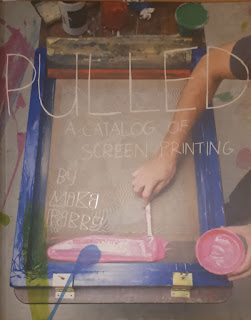
Pulled
by Mike Perry
Pulled is a collection of silkscreen artists and their work. It includes groups such as Seripop, and individual artists. A great book to have for inspiration.
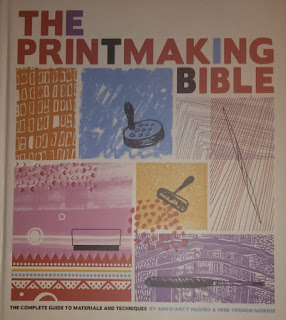
The Printmaking Bible
by Ann D'arcy and Hebe Vernon-Morris
This is a hefty book, and delves into the different types of printmaking. It is very educational and goes through the processes for each printmaking method. Included are intaglio, relief, lithography, screen printing, and monotype. The book features step by step instructions for each method, as well as different artists and their work. It also goes into the history of each method.

Breakthrough! Overcome Creative Block and Spark Your Imagination
This book is a collection of thoughts from many different professionals on ideas to overcome creative block. It includes writing from graphic designers, artists, illustrators, writers, creative directors, musicians, and photographers. Every artist experiences creative block, and this book is a fun read through a diverse array of solutions.

Show Your Work!
by Austin Kleon
This book is a fun look at the art of promotion. Austin gives simple, do-able ideas on how to get your work out there for the world to see. He talks about showing your process, sharing one thing everyday, and the importance of sticking it out and being persistent in your career. He also discusses how to take criticism, a very useful skill when one is an artist.

It's Not How Good You Are, It's How Good You Want to Be
by Paul Arden
The first part of this book discusses mindset, ambition and success.The second part focusses on the process of graphic design, coming up with ideas, dealing with clients. Paul simplifies ideas and makes the solutions clear and concise. He gives direct advice and makes it understandable.

Work / Life
This is a book by Uppercase, the design magazine headed by Janine Vangool. Work Life features 100 illustrators from around the world, showing their work and their process. Each artist has a short write up, accompanied by their visual solution to a custom assignment given to them.

by Mike Perry
Pulled is a collection of silkscreen artists and their work. It includes groups such as Seripop, and individual artists. A great book to have for inspiration.

The Printmaking Bible
by Ann D'arcy and Hebe Vernon-Morris
This is a hefty book, and delves into the different types of printmaking. It is very educational and goes through the processes for each printmaking method. Included are intaglio, relief, lithography, screen printing, and monotype. The book features step by step instructions for each method, as well as different artists and their work. It also goes into the history of each method.
Friday, November 25, 2016
East Side Culture Crawl
Last weekend I took in the Culture Crawl, an artistic festival that opens up studios and lets people into the artist's space. Spread out over the east side of Vancouver, I focussed on the Clark Drive area (close to Commerical). Many different mediums are represented - paintings, photography, wood work, glass, pottery, sculpture and textiles. Here are some photos I took at the festival.
Glass hearts by Laura Burns

Painted alarm bells by Christina Norberg
http://www.christinanorberg.com/

Painting by Jon Shaw
http://jonshawpaintings.com/

Pottery by Jinny Whitehead
http://jinnywhitehead.com/

Pottery by Shawn Mccord

Initial eggs by Jacquie Rolston
http://jacquiedraws.com/
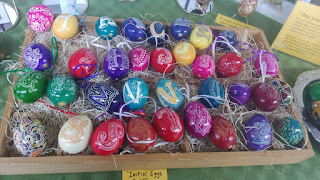
Glass hearts by Laura Burns

Painted alarm bells by Christina Norberg
http://www.christinanorberg.com/

Painting by Jon Shaw
http://jonshawpaintings.com/

Pottery by Jinny Whitehead
http://jinnywhitehead.com/

Pottery by Shawn Mccord

Initial eggs by Jacquie Rolston
http://jacquiedraws.com/

Friday, November 18, 2016
Helpful books Part I
I thought I would share some books that I have found helpful and inspirational for illustration and business. Going through my books I found more than I thought I would, so will probably break this up into two posts.
 Nuts & Bolts
This is a book by Charles Hively, the art director behind 3x3 magazine (an illustration magazine). It is a collection of illustration advice from speeches he gave at universities. It is very direct and gives short to the point advice for emerging illustrators. He talks about illustration as a business, websites, and being visible as an illustrator. I picked Nuts & Bolts up in New York, so am not sure if it is available in Canada.
 Art Inc.
This book is by artist and illustrator Lisa Congdon, and talks about building your career as an artist. It is a compact guide for artists wishing to grow their business. She discusses different paths you can take, for example galleries or exhibitions, and also illustration and licensing your work. She goes through the nitty gritty of promoting yourself and treating your art as a business. Lisa also talks about managing success, and different options when you get really busy. She also includes profiles of different artists.
 How to be an Illustrator
by Darrel Rees
This book goes a little more in depth to how to operate your illustration business. He talks about portfolios, looking for your first job, how to go about producing your first job, finances, promotion. He also discusses the pros and cons of working from home, or renting a studio. Darrel also talks about agents, and the pros and cons. He includes interviews with professional illustrators, such as Sam Weber and Yuko Shimizu.
 Handbook of Pricing and Ethical Guidelines
This is the Graphic Artists Guild Handbook, and is an extremely thorough look at the graphic arts and illustration industries. It covers legal rights, professional and technology issues, business practices, contracts. It goes in depth into graphic design, web design, and illustration and discusses each industry. It also has lists of pricing standards for each industry. This is the section I find most useful, and use it for quoting jobs. For example it will list price ranges for editorial illustration for full page, half page, spot illustrations. This book also includes samples of contracts, so you can use it for drafting your own contract.
 Children's Writers and Illustrators Market
This books talks about the publishing industry, and how to go about submitting your work. The majority of the book is a list of publishers and their contact info. The list includes book publishers, magazines, and agents. Information on how to submit work is included with each listing. There is also a list of conferences and workshops.
 The Handmade Marketplace
by Kari Chapin
This book is about the craft and handmade industry. It talks about branding, business practices, marketing. It also talks about blogging and social media. There are also sections on craft fairs, online stores, and getting into brick and mortar stores.

This is a book by Charles Hively, the art director behind 3x3 magazine (an illustration magazine). It is a collection of illustration advice from speeches he gave at universities. It is very direct and gives short to the point advice for emerging illustrators. He talks about illustration as a business, websites, and being visible as an illustrator. I picked Nuts & Bolts up in New York, so am not sure if it is available in Canada.

This book is by artist and illustrator Lisa Congdon, and talks about building your career as an artist. It is a compact guide for artists wishing to grow their business. She discusses different paths you can take, for example galleries or exhibitions, and also illustration and licensing your work. She goes through the nitty gritty of promoting yourself and treating your art as a business. Lisa also talks about managing success, and different options when you get really busy. She also includes profiles of different artists.

by Darrel Rees
This book goes a little more in depth to how to operate your illustration business. He talks about portfolios, looking for your first job, how to go about producing your first job, finances, promotion. He also discusses the pros and cons of working from home, or renting a studio. Darrel also talks about agents, and the pros and cons. He includes interviews with professional illustrators, such as Sam Weber and Yuko Shimizu.

This is the Graphic Artists Guild Handbook, and is an extremely thorough look at the graphic arts and illustration industries. It covers legal rights, professional and technology issues, business practices, contracts. It goes in depth into graphic design, web design, and illustration and discusses each industry. It also has lists of pricing standards for each industry. This is the section I find most useful, and use it for quoting jobs. For example it will list price ranges for editorial illustration for full page, half page, spot illustrations. This book also includes samples of contracts, so you can use it for drafting your own contract.

This books talks about the publishing industry, and how to go about submitting your work. The majority of the book is a list of publishers and their contact info. The list includes book publishers, magazines, and agents. Information on how to submit work is included with each listing. There is also a list of conferences and workshops.

by Kari Chapin
This book is about the craft and handmade industry. It talks about branding, business practices, marketing. It also talks about blogging and social media. There are also sections on craft fairs, online stores, and getting into brick and mortar stores.
Subscribe to:
Posts (Atom)